draw a 3d powerpoint shape
Part #2: Animate your shape
The basic principle of the animation hither is a flipbook, or terminate movement effect.
To create this in PowerPoint 2010 and later on, nosotros must use both an Announced and Disappear animation on each object and so that each one flashes in and out quickly, creating the illusion of move (ironically, in versions 2007 and earlier, it's actually easier to do by but adding a Flash One time blitheness to each object).
Let's first brainstorm by adding the Appear animation, so with your shape selected, from the Animations tab, select the Appear blitheness.
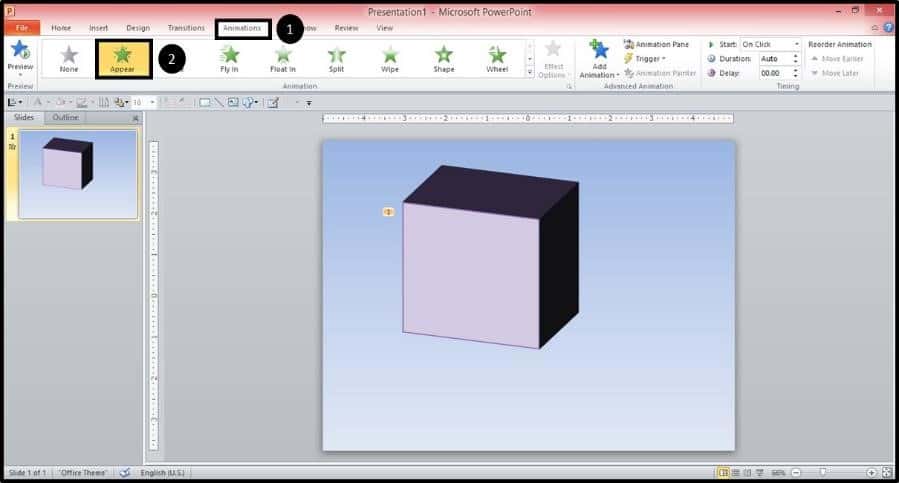
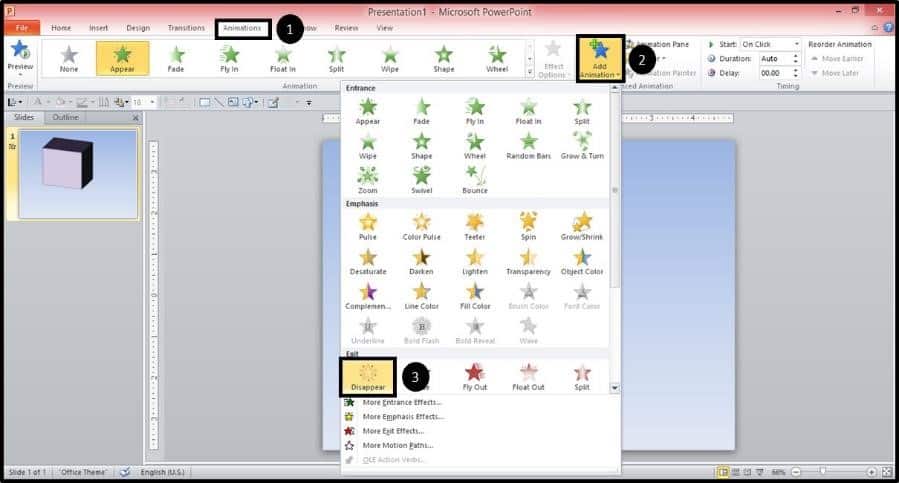
With the Announced blitheness added, next open up the Add Animation dropdown and whorl down to the Disappear animation (so now the object is animated with both an Announced and Disappear blitheness).
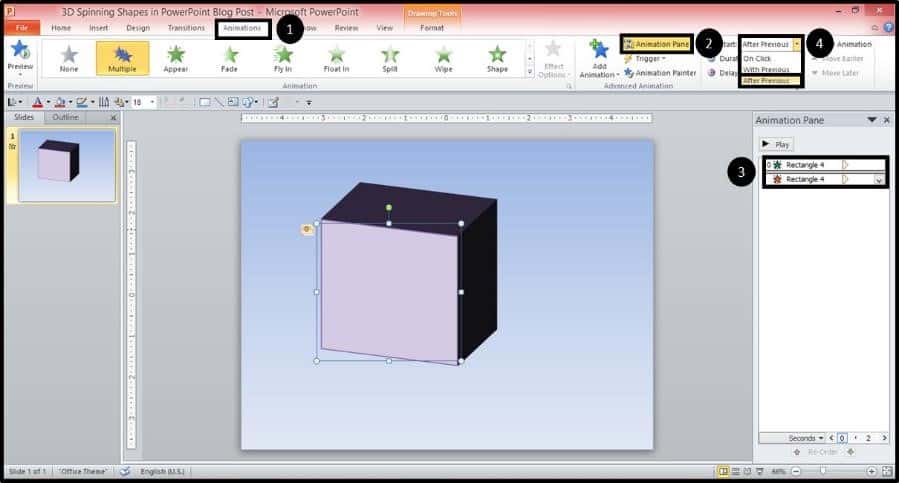
With both animations added, open up the Animation Pane, select both the Appear and Disappear animations that we've simply added, and change the timing to start 'Later Previous'.
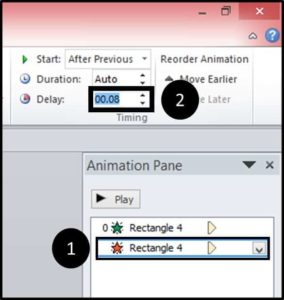
Side by side select the disappear blitheness (the second animation in the Animation pane) and add a delay of 00.08 seconds in the Timing group.
Part #three: Layering the objects to create the animation consequence
With the animations set and customized, next we demand to start layering our object to create the visual effect of motion.
The actual sequence itself will be multiple layers of our object that when played, will create a flipbook-similar effect in PowerPoint, with each new rectangle (or object) moving and rotating slightly, creating the visual effect of a 3D rotating object.
Equally the starting point, we desire to brainstorm with a simple second version of our object.
Step #1. Rotate Object Back Into A 2D Object
Right-click your object and from the right-click menu Format Shape and in 3-D Rotation, brand both the X and Y rotation zero, hiding the depth of the object. And then the depth is still in that location – information technology's just hidden.
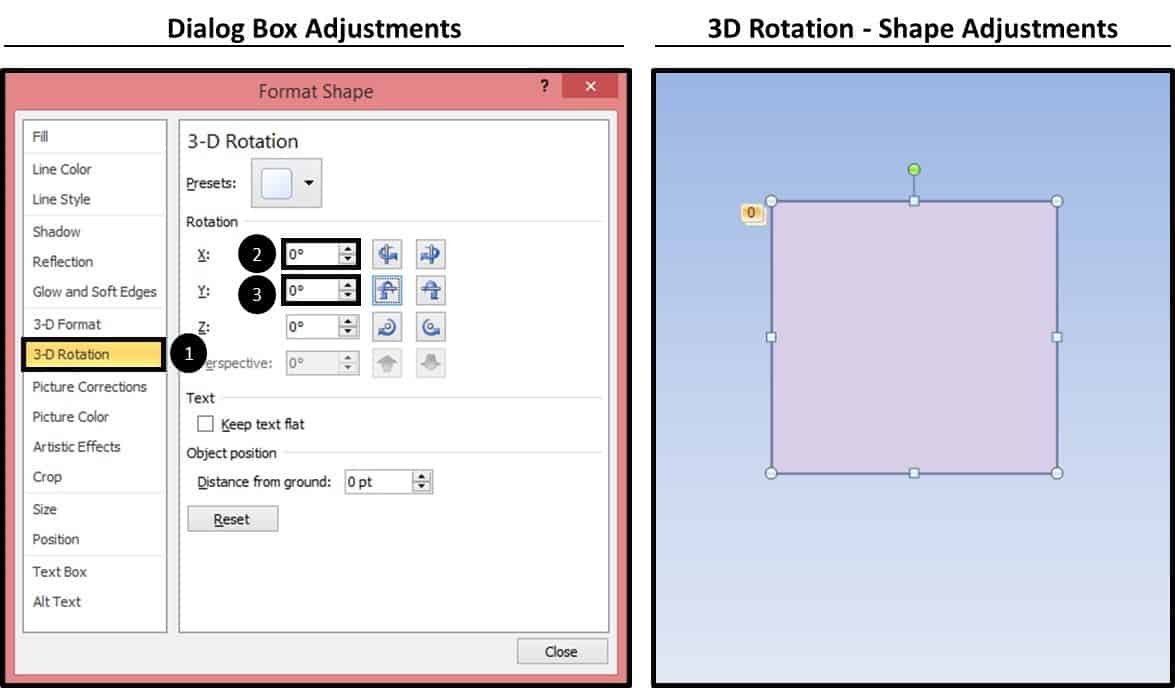
Step #2. Indistinguishable the Object
With the rotation set up at zilch, re-create (Ctrl + C) and paste (Ctrl + 5) or duplicate (Ctrl + D) your object then that you accept two identical objects on your slide.
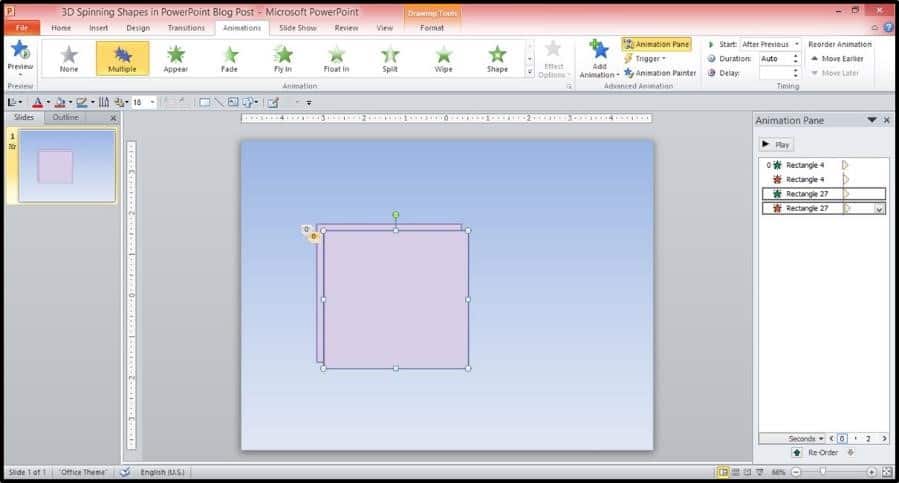
Notation: Before you lot continue to create all of the layers for the 3D rotation animation, double check that your animations are set to 'After Previous' and that the Disappear animation has a 00.08 second delay.
Step #3. Rotate the New Object x°
Now nosotros will begin rotating our layers to create the flipbook-similar effect here in PowerPoint. To do that, right-click the new, duplicated object, select Format Shape from the right-click bill of fare to open upward the Format shape dialog box.
For this
tutorial, we are going to rotate our object 180 degrees on both the X and Y axis. You can cull whatsoever increase you want to rotate the objects. For this tutorial, we'll rotate them in 10 degree increments (that is, you'll increase the rotation past ten degrees each time).
Note: The smaller the increments, the smoother your rotation volition be, just it will take longer to make. So 5 degree increments volition look smoother than 10 degree increments but volition take twice as long to brand.
So in the 3D Rotation carte du jour, change the Ten and Y axis to x degrees.
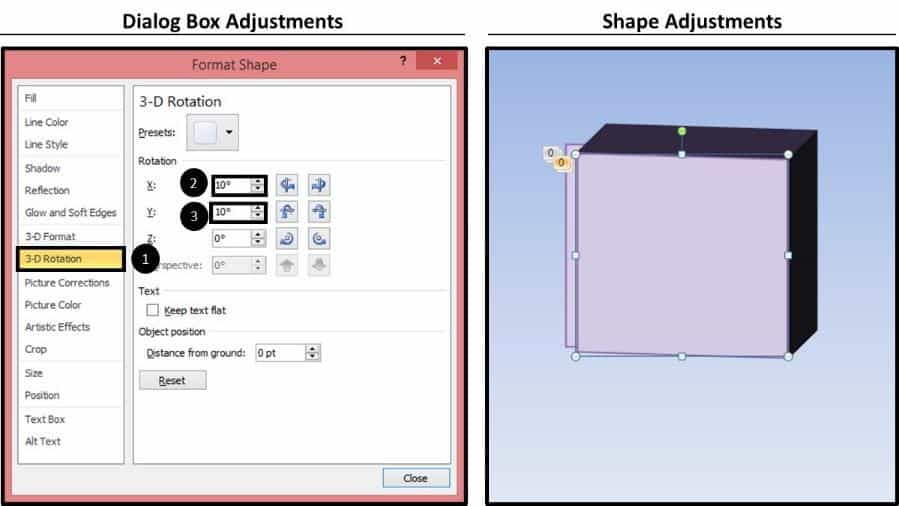
Step #four. Place the New Object
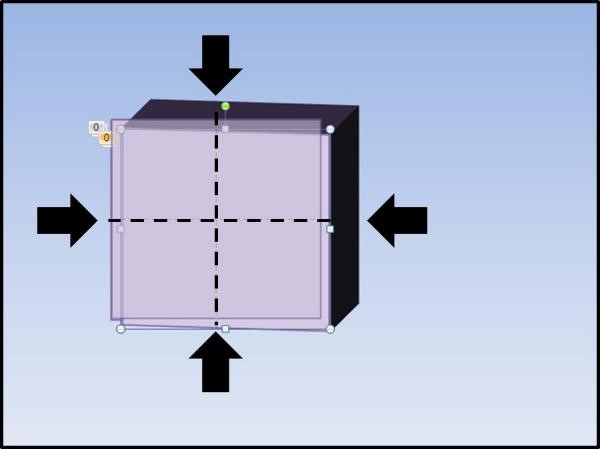
With the 10 caste rotation ready, select the object and identify it directly on top of the previous object. You tin can employ the Smart Guides in PowerPoint 2010 and 2013 (the dashed cross which I've highlighted in the picture beneath) to make sure the placement is perfect.
Perfect placement will ensure that you have a shine animation consequence.
Step #v. Repeat Steps #three and #four Until the Rotation is Complete
Repeat the copy / paste / rotation / placement sequence, for the remainder of your shapes, increasing the rotation bending each time.
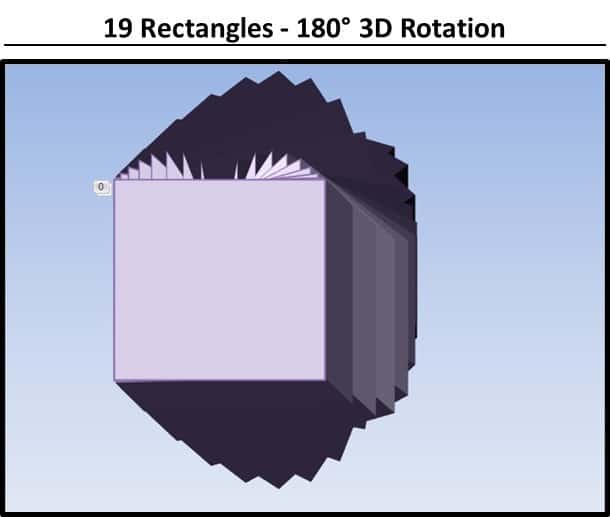
For a 180 degree rotation in increments of 10 degrees, you lot volition need 19 rectangles or shapes in total. If you are rotating past 5 degrees, yous volition demand 37 shapes, etc. In the below image, I've added 19 rectangles.
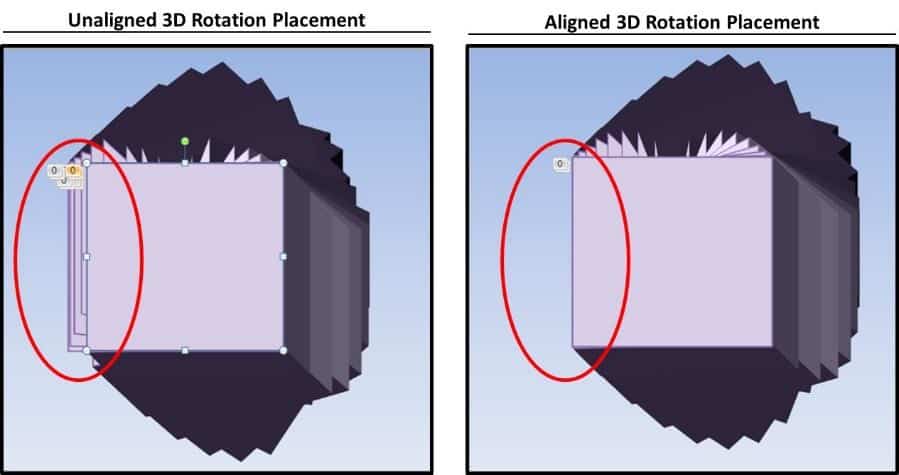
Note: If you aren't certain if everything lines upwards, you can do a quick check by selecting all the objects (CTRL + A on a PC), going to the Adjust menu on the Ribbon, selecting Align, then Marshal Centre, then going to the same menu and choosing Align Middle. This quick cheque ensures that objects are in perfect alignment, as demonstrated on the right.
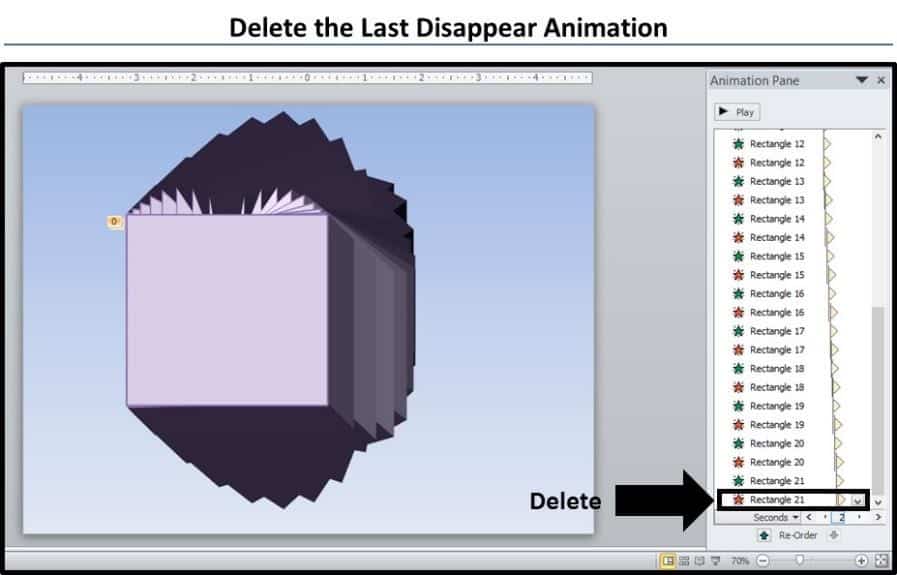
Step #six. Remove the Last Disappear Animation
One time you take all of your objects consummate, remove the last disappear animation, so that your final object remains on the screen. Inside the Blitheness Pane, simply select the last animation and striking Delete on your keyboard.
Animation formatting tips
One time you have everything completed, you can modify the colors of the cube or change the shape altogether.
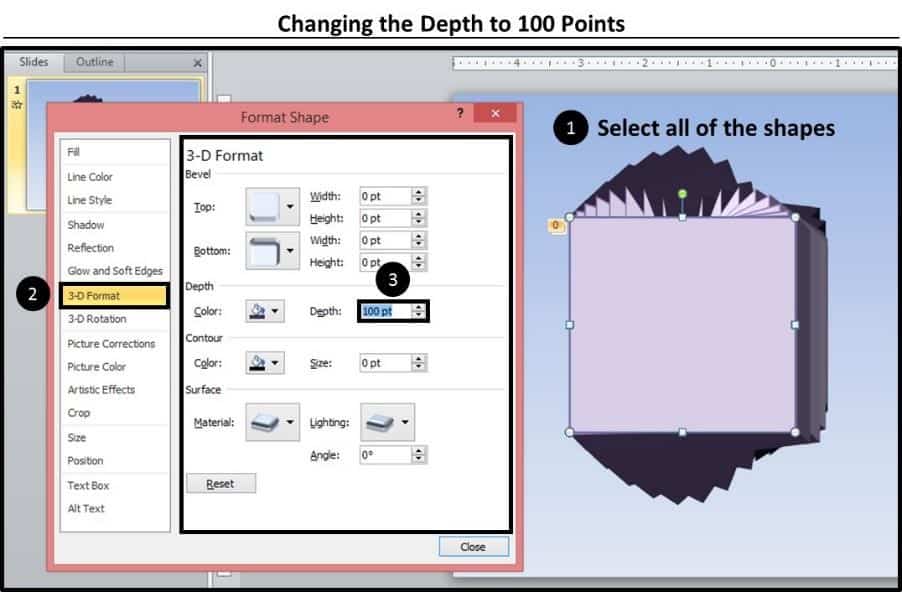
To play with different formatting options, kickoff select all the objects again (CTRL + A on a PC). Then, to modify the cube format, you tin can just go to the Format menu and change the settings there. Here I've changed the depth from 200 points to 100 points.
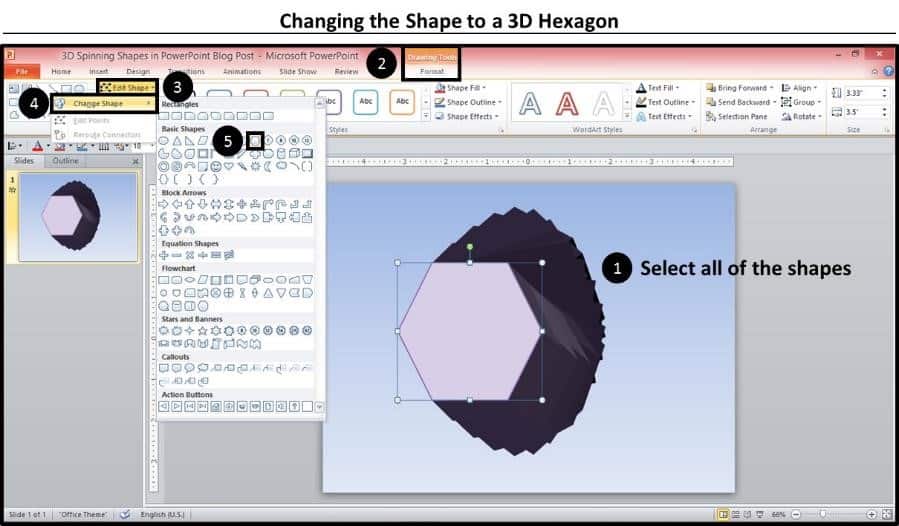
To alter the shape altogether, with all of the rectangles selected, from the Drawing Tools Format tab, open the Edit Shapes dropdown, select Change Shape and choose any shape you like. Here I've changed the shape into a hexagon.
Conclusion
While this animation trick tin accept a bit of time to perfect, the process becomes much faster and easier with do. Plus, one time you do it the showtime fourth dimension, you can reuse the same effect with a variety of shapes, and then your efforts volition exist well worth information technology.
Attempt information technology out and encounter what combo of shapes and rotations you can come upwards with!
You tin can also download the working files for this tutorial here to follow along with me.
benedictfireakingen1946.blogspot.com
Source: https://nutsandboltsspeedtraining.com/powerpoint-tutorials/rotating-3d-shapes-with-powerpoint-animations/#:~:text=To%20make%20your%20object%203D,the%20depth%20of%20the%20shape.
0 Response to "draw a 3d powerpoint shape"
إرسال تعليق