The Measure You Put in the Ashanti Measurements You Again
Within the glass cases in the Africa Galleries, they announced as miniaturized trophies, toys, or jewelry, but these beautifully crafted sculptures and icons of myth and reality were vital tools in the bustling trade hub of Africa's Gold Declension.
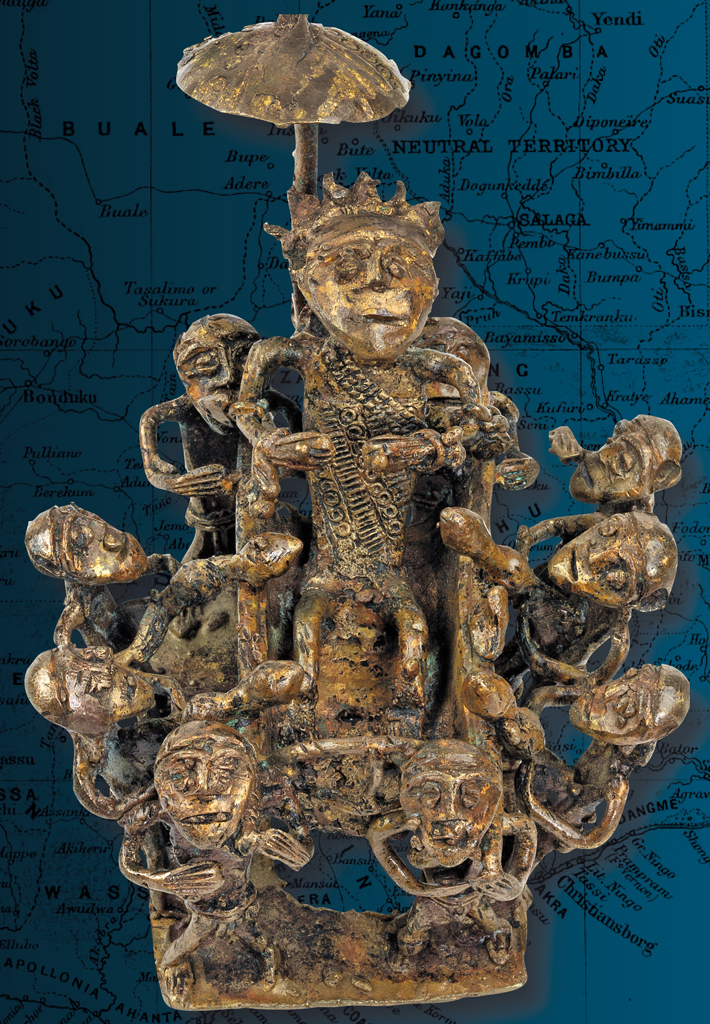
Between THE 9th AND 16TH CENTURIES, desert-traversing trade routes connecting Arab republic of egypt, Ethiopia, Arabia, and Europe to sub-Saharan Africa carried ivory, salt, spices, and aureate among kingdoms and cultures. In the forested region that is today modern Ghana, gold was plentiful and relatively piece of cake to excerpt from the environment. It was here that the Akan-speaking peoples, fabricated upwards of several populations that shared a language and many cultural elements, established a gold market so rich that the region was given the moniker "the Gold Coast."
Valuable every bit both a commodity and equally currency, gold grit was used equally a medium of exchange. The Dyula, Sudanese people whose merchants began trading with the Akan in the late 14th century, are credited with introducing Islamic designs and a weight system based on Islamic units. Long before metalworking techniques were adult, the Akan used tropical seeds on which to base their system of weights. Over fourth dimension, a complex system of standardized measures was used to conduct transactions. By the 14th century, goldsmiths in the region were manufacturing their own weights, scoops, scales, and boxes for storing gilt dust to facilitate trade.
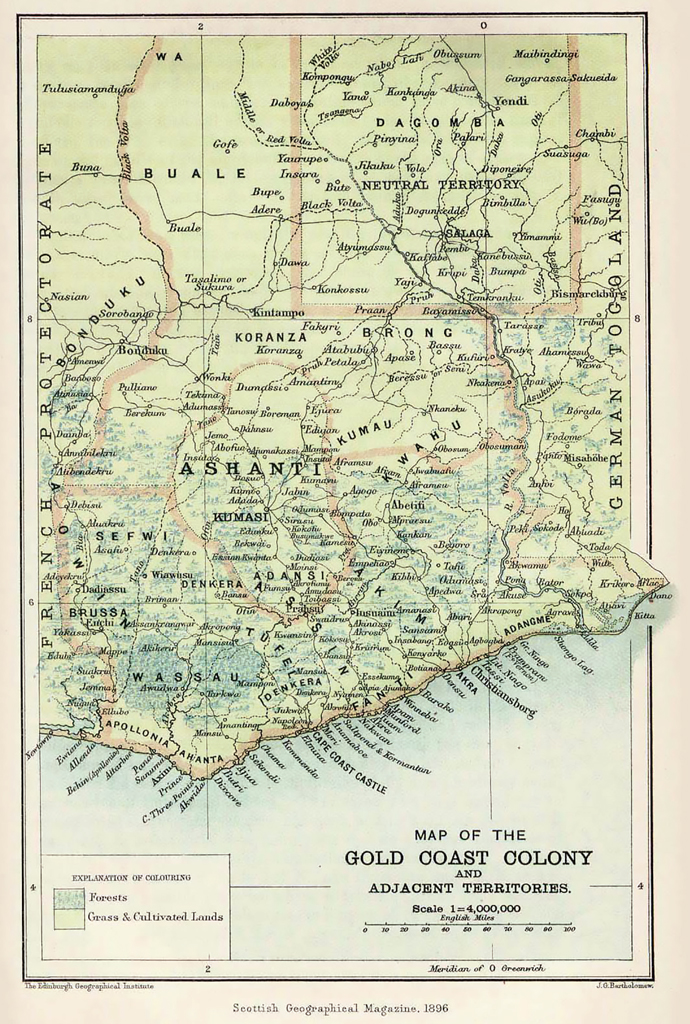
The Asante, also known as Ashanti, are an indigenous group among the Akan that utilized their aureate wealth to build an empire. Organized in 1670, the Asante embarked on a military entrada to rule the surrounding states under a centralized regime and judiciary organization. It is their kingdom that the Penn Museum's gold weight collection represents.
The term "gold" weight is a chip of a misnomer. While they are used to mensurate gold grit and nuggets, they are actually cast from brass. There are 2 chief ways the Asante produced their brass objects. In direct casting, a mold made from dirt would exist formed effectually the object meant to be copied. The object itself would and then burn abroad when the mold was fired, leaving the void for the molten metal to be poured into. To make a great variety of original designs and complex objects, casters employed the "lost wax" method. For this, a mold is made by first sculpting an original, finely detailed piece out of wax, dirt, or resin, which is coated past either dipping in or painting on layers of dirt slip (a liquefied dirt mixture with the consistency of cream) to ensure that all the elements of the sculpture are captured. Clay is packed around the mold and then is set to dry. Placed in a furnace, the wax is drained away and the mold is now ready to exist filled with molten brass.


Some weights have boosted nuggets of brass attached to them or holes drilled into them. The goldsmith had to judge the corporeality of molten metal required to make specific weights and, if incorrect, could add small amounts of metal or take away metal to meet a lower or higher weight standard without losing the completed work.
There were over 60 values used by the Akan that are as small as .04 grams. Each population eye used local names for the measures, but the weight standards between regions were the same. The earliest weight systems used the Islamic standard, as Europeans did non go far until the Portuguese landed in 1482. Because of the extent of global trade, by the 19th century, Islamic, Portuguese, and troy standards were combined together in the standard weight system. Gold dust was the primary currency of the region by the middle of the 18th century until paper currency based on the British pound was introduced in 1899.
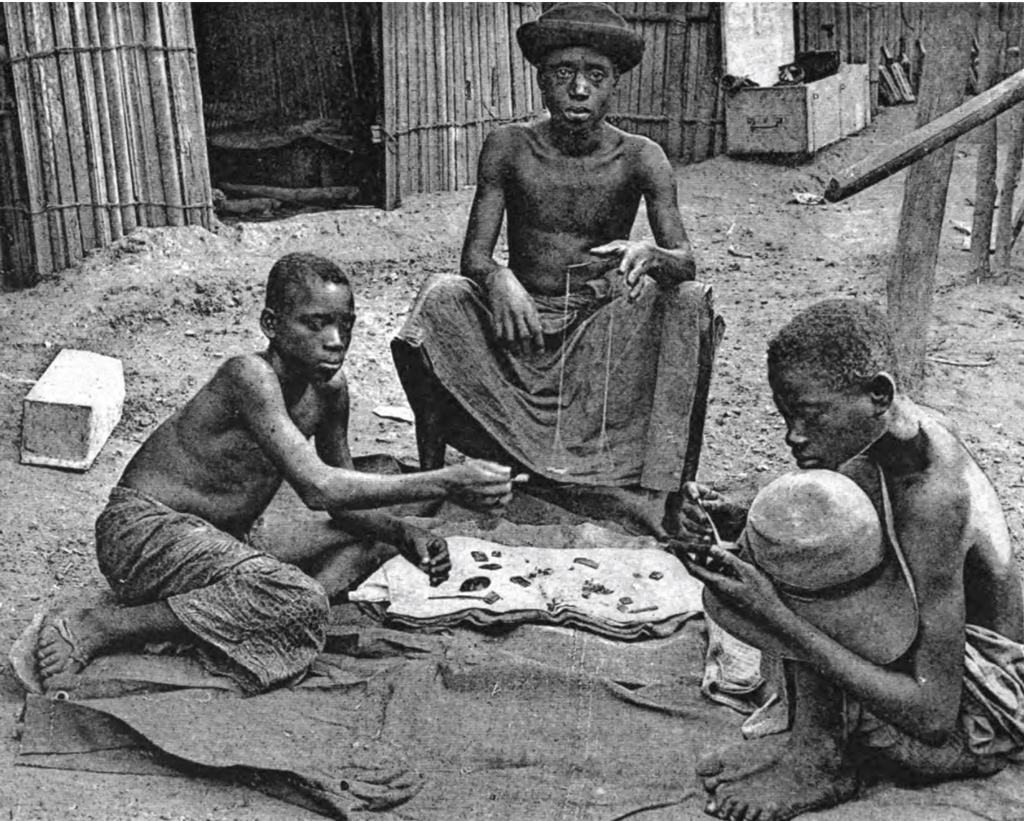
Treatment gold dust is a delicate skill, and boys would brainstorm practicing using miniature weights and scales. Most developed men owned a set of weights, often inherited from previous generations. The value of each private weight was known by its owner, fifty-fifty in sets that included over a hundred weights. The wealthier and more than powerful traders and chiefs would have sets of weights greater in number, units of measurement, and artistic flair. Depending on the size of the fix, golden weights were stored in a special container such equally a bag or a breast.
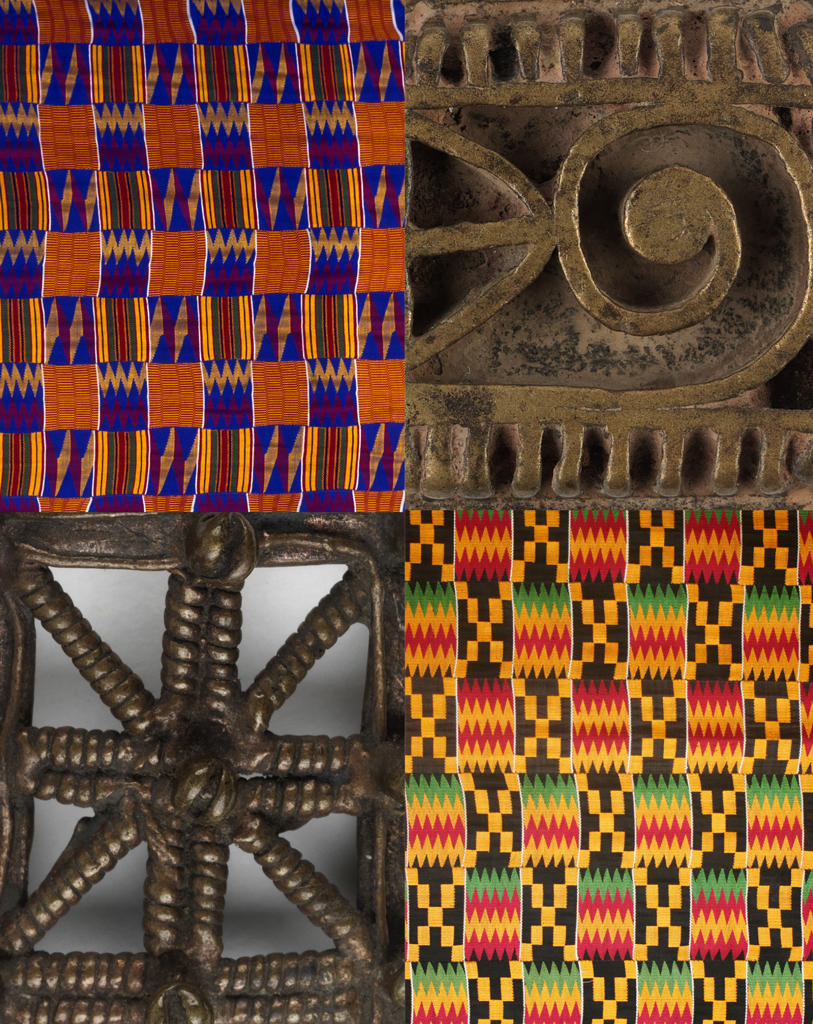
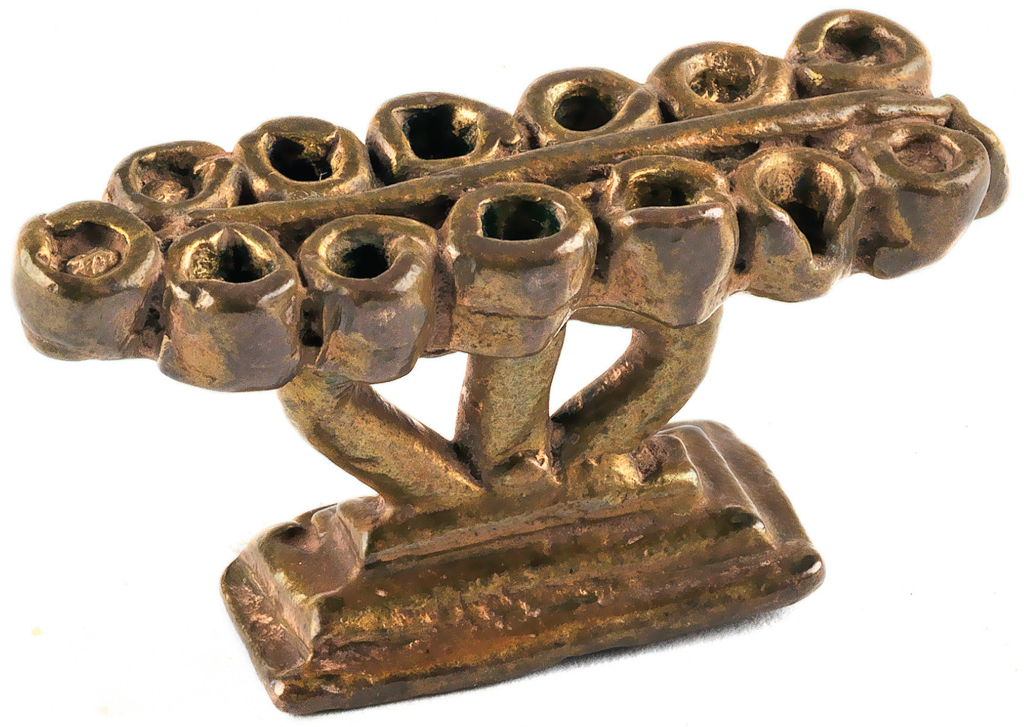
Considering the gold weights accept not been excavated in archaeological contexts, dating their development is largely speculative. It is more often than not believed that the abstruse and geometric designs are the earliest weights, influenced past Islamic culture brought by the first trans-Saharan traders. Much of Islamic art avoids representations of living beings in function due to the prohibition of idolatry. Many of the design motifs used in the geometric gold weights are likewise constitute in Akan textiles and on wall and home decorations. The geometric patterns became more complex over fourth dimension, adding spirals and waves and even stylized representations of man figures and animals.
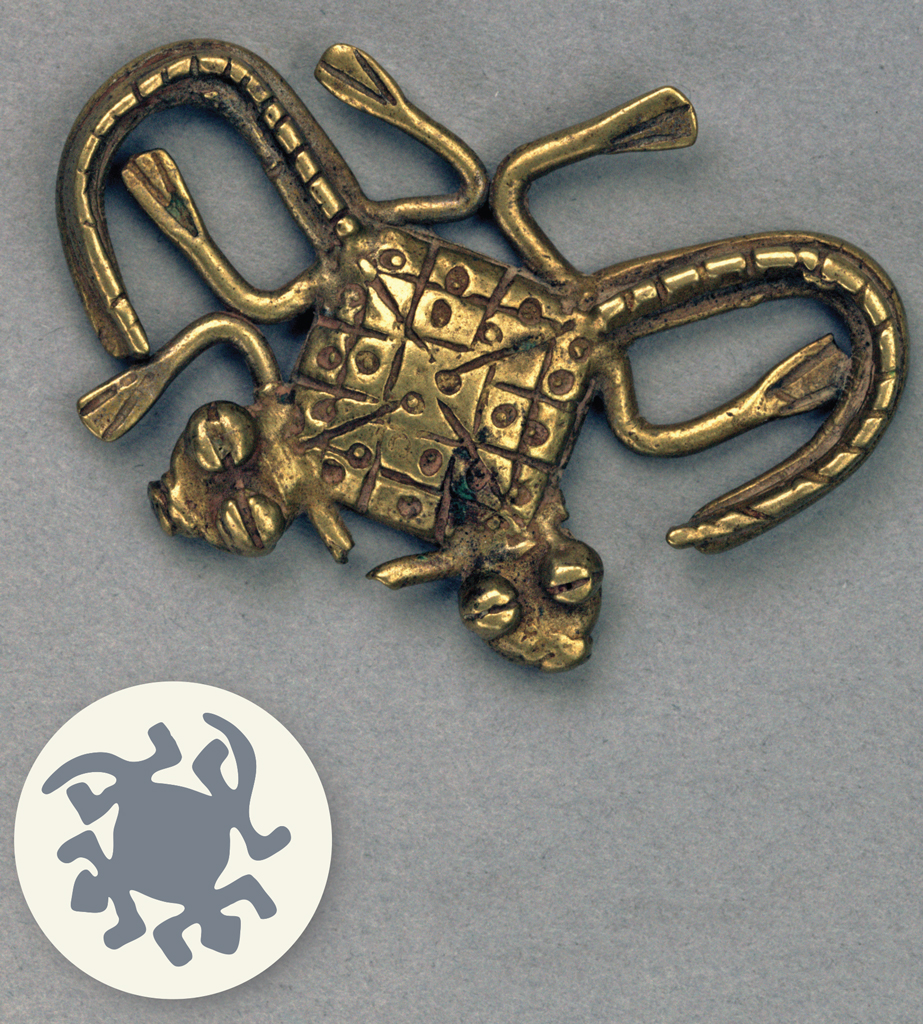
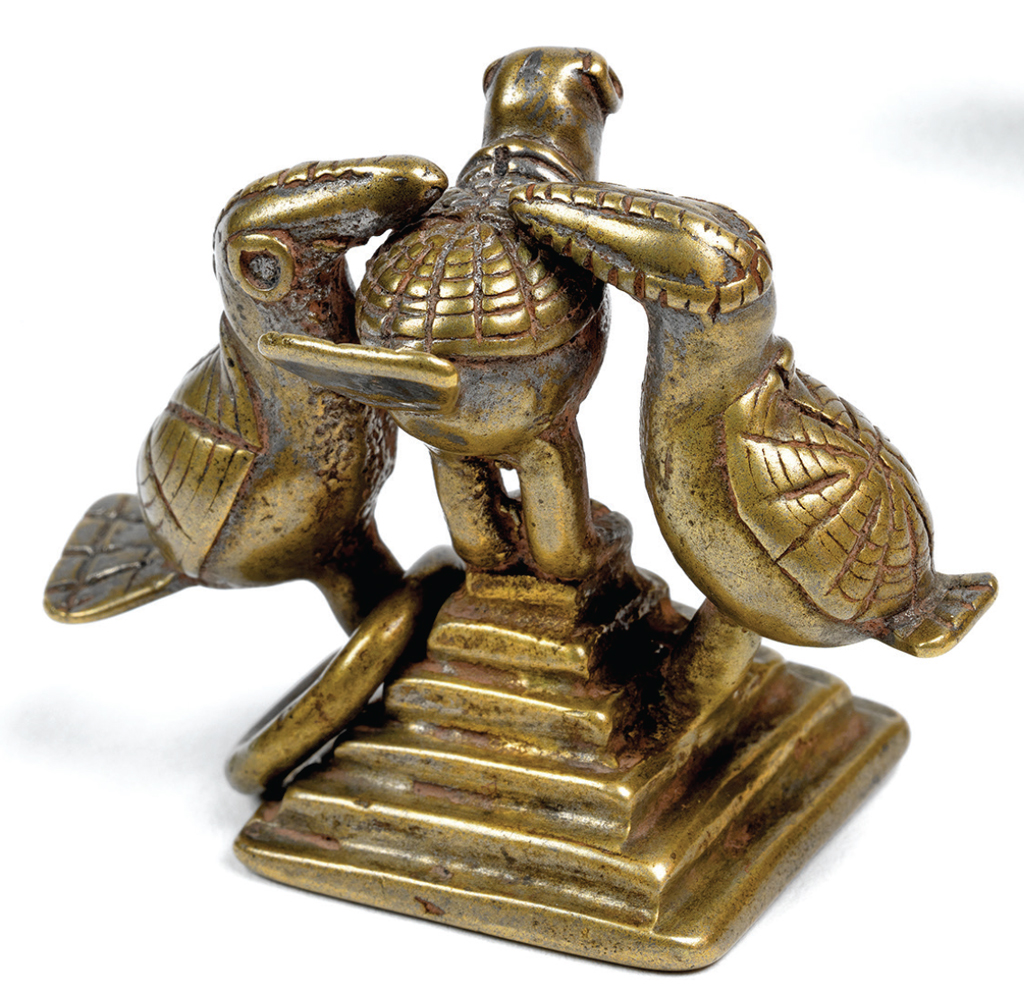
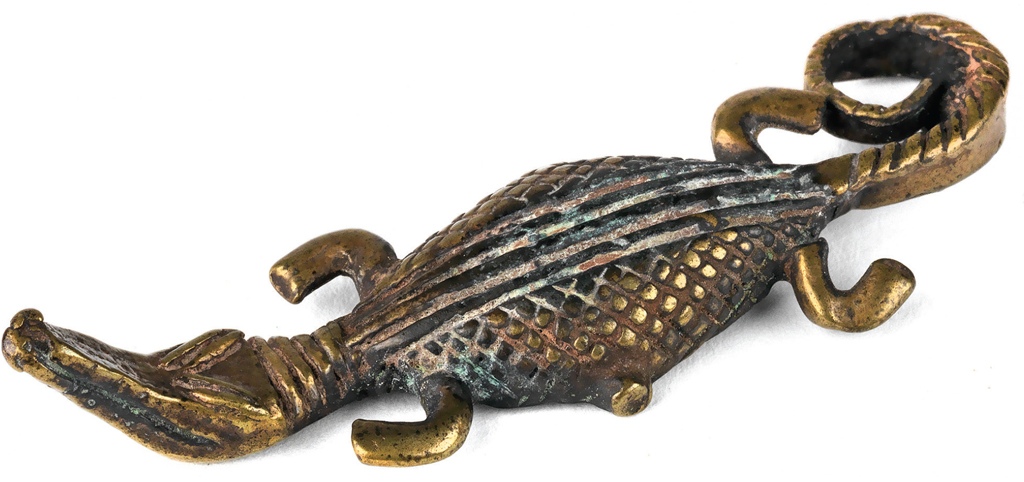
Figurative weights are representative of everyday objects such every bit shoes, tools, knives, or rope, and breathing objects similar animals and people. These are presumed to have been adopted soon subsequently geometric designs.
Natural objects similar seed pods were once used to measure out golden grit, and their brass counterparts were probable direct castings. Interestingly, the representations of animals are all of undomesticated creatures that would not live in a village. It is believed that the symbolism of the weights equally balanced and impartial is so of import that the inclusion of animals that take a human relationship with people for food or labor would hinder the fairness of the transaction.
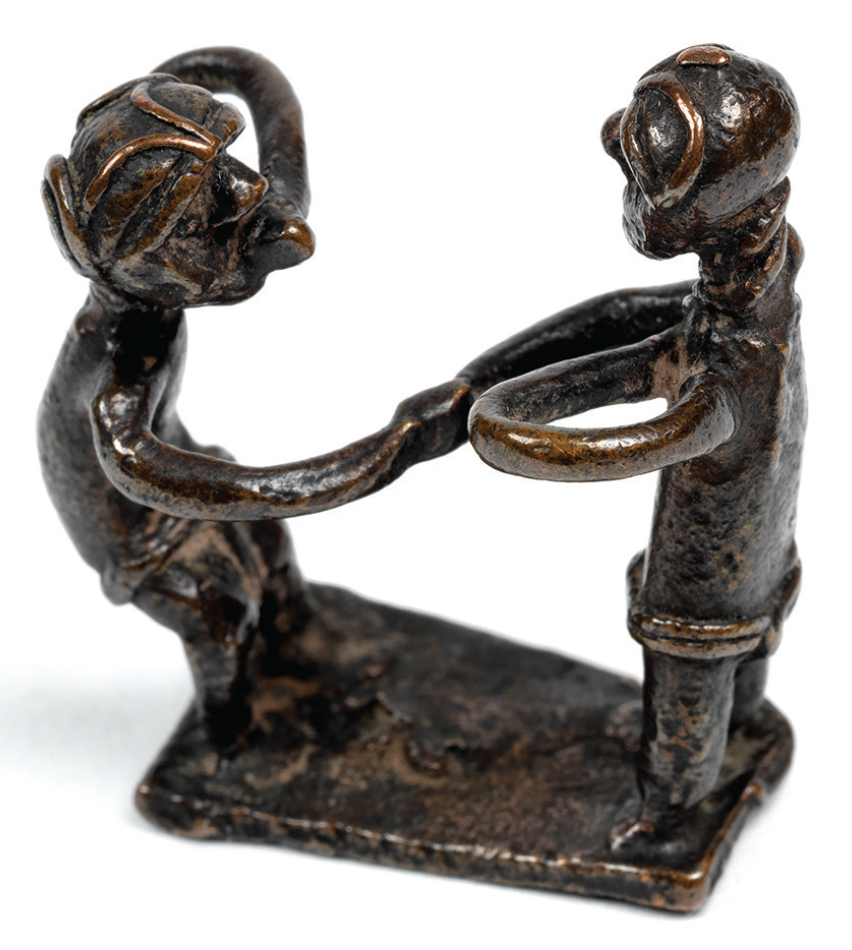
Human figures are depicted in activities like hunting or ritual practise and are often identified through details in dress and hair as a specific social status or ethnicity. Figures that depict Europeans became mutual in the early 18th century. Firearms were heavily traded by the middle of the 17th century and were represented alongside other weapons in gold weight sets from that period on.
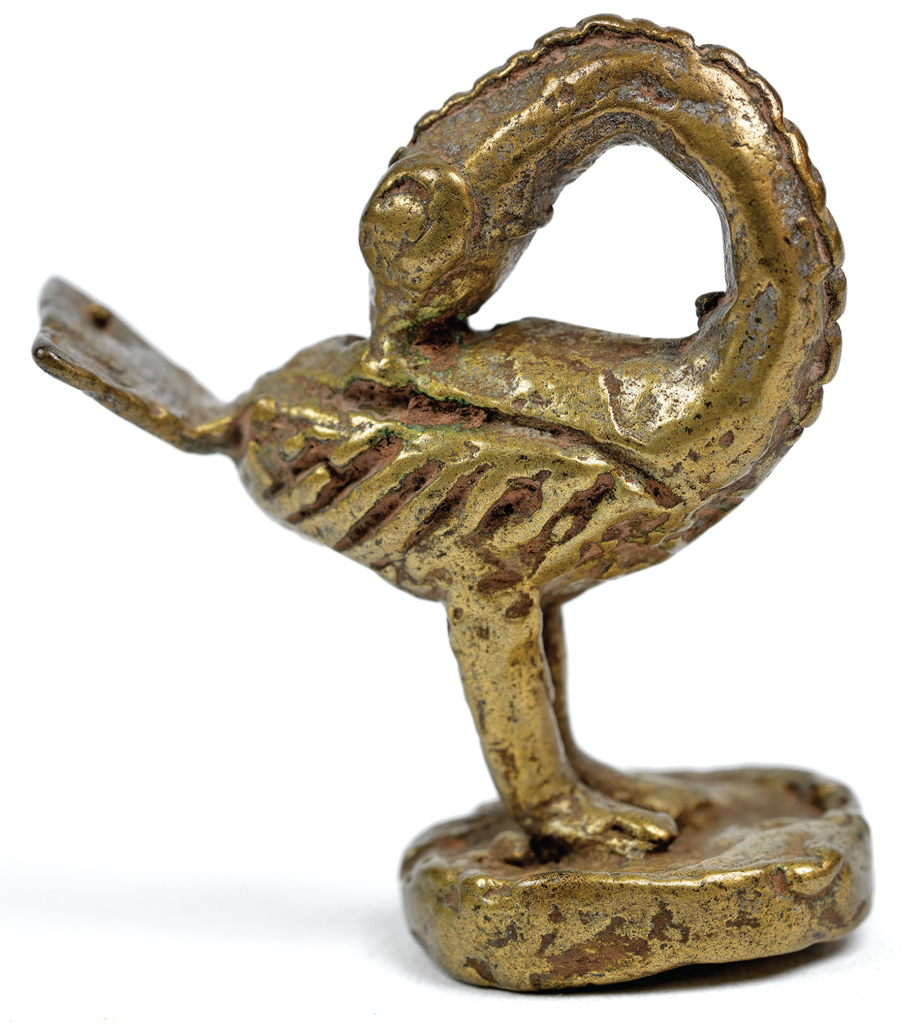
The gold weights serve more than than a functional or artistic purpose: they are representative of cultural norms, standards, and ideals. The figures include references to proverbs, myths, and histories of the Asante people. They stand for a applied tool used every twenty-four hour period in economical activeness merely created in unique creative forms that exhibit the personality and civilisation of the metalsmiths and merchants who created and used them. Scholars tin can observe changes in iconography in weight sets that reflect the influences on the Akan people's civilisation and document changing trends in style. In this mode they are valuable for their artistic and cultural significance likewise equally their economic part. In that location is nothing quite like them in use today.
Christina Griffith is Associate Editor of Trek.
For Farther Reading
Crownover, D. and W. Kohler. "Gold Beads from the Gold Declension." Expedition 15.iii: 25–29 (1973).
Garrard, T.F. "Studies in Akan Goldweights (III): The Weight Names." Transactions of the Historical Social club of Ghana, 14.i: one–16 (1973).
Sheales, F. African Gilt-Weights in the British Museum. Online Research Catalogue. https://www.britishmuseum.org/research/online_research_ catalogues/agw/african_gold-weights/origins_and_history.aspx
benedictfireakingen1946.blogspot.com
Source: https://www.penn.museum/sites/expedition/the-asante-gold-weights/
0 Response to "The Measure You Put in the Ashanti Measurements You Again"
إرسال تعليق